Civil Rights Church Burnings Civil Rights Church Bombing Pencil Art
4 Niggling Girls Died In The 16th Street Baptist Church building Bombing In 1963. A fifth Survived 11:05 Copy the code beneath to embed the WBUR audio histrion on your site
Copy the code beneath to embed the WBUR audio histrion on your site
Play
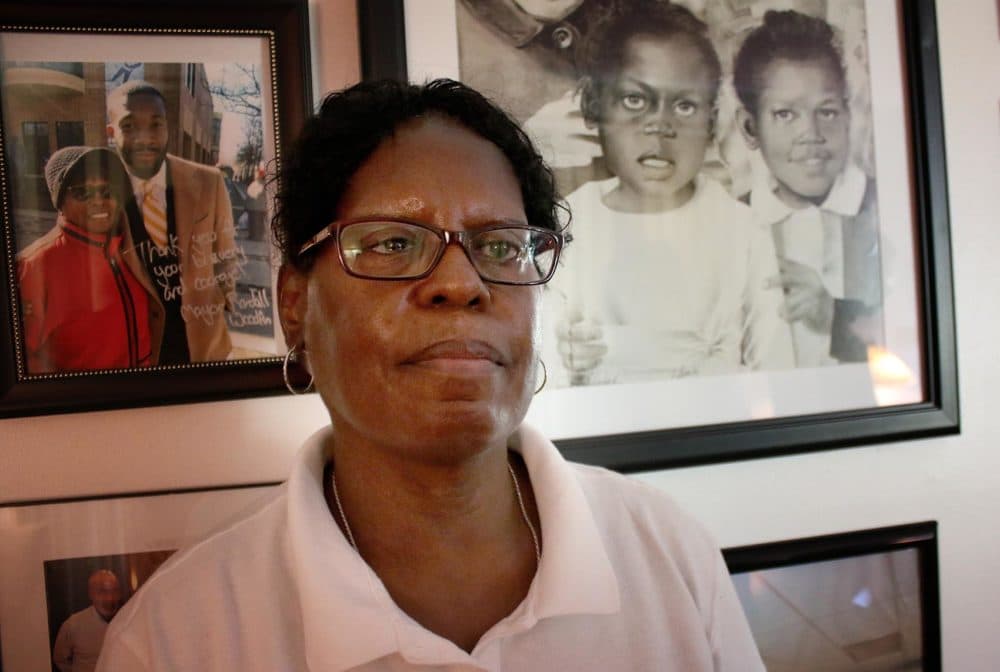
Birmingham, Alabama, is a changing city — information technology's going through a tech industry blast, it'southward got a burgeoning food scene and millennials are flocking there for the affordable housing and task opportunities.
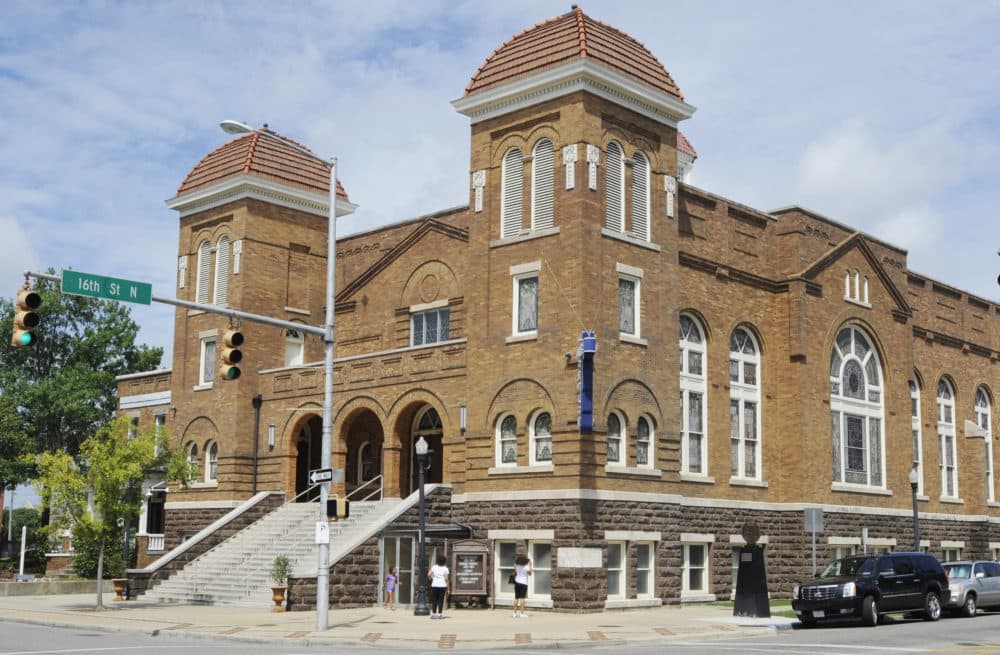
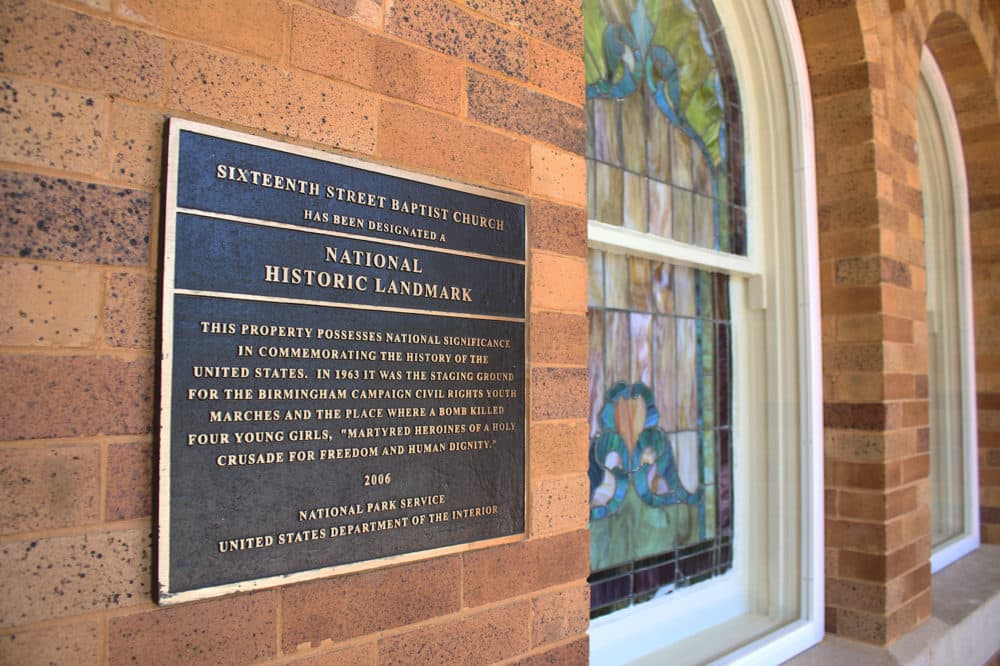
Information technology's also a urban center grappling with a painful past, 1 that includes lynching and marches and the Ku Klux Klan. Information technology was also the site of the 16th Street Baptist Church bombing in 1963 that claimed the lives of four immature girls: Carole Robertson, Cynthia Wesley, Denise McNair and Addie Mae Collins.
But there was a survivor among the girls in the downstairs ladies' lounge. Her proper noun is Sarah Collins Rudolph, Addie Mae'southward younger sister. She calls herself the "fifth little daughter," and has spent her life coming to terms with the physical — and mental — fallout from the attack.
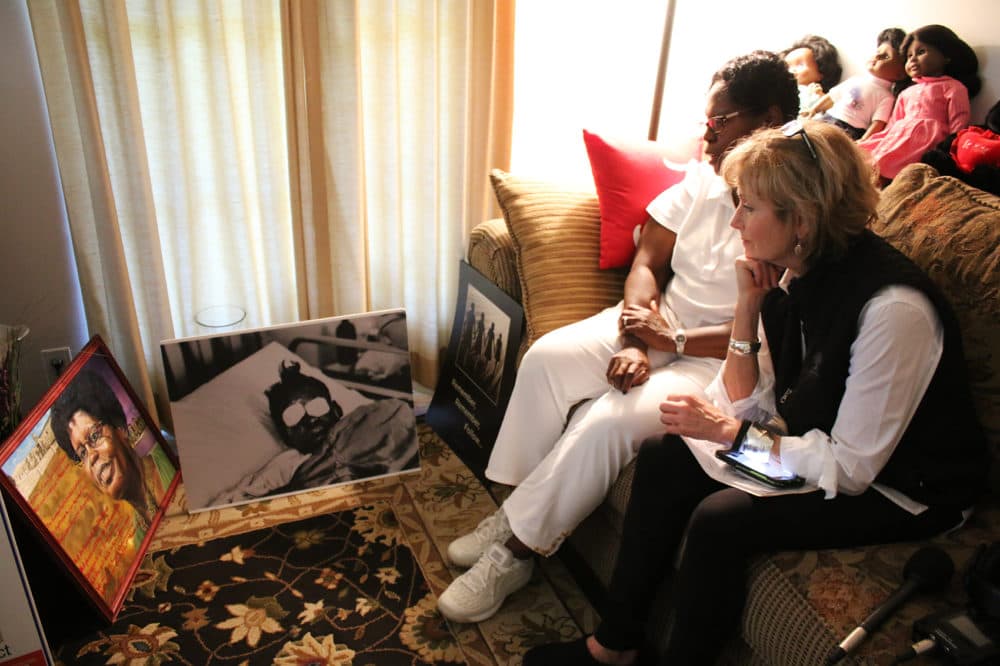
Rudolph says she'due south not surprised that many accept never heard of her. She says she was "just a survivor." But she admits, with a little prodding, that she'south a carrier of history. In fact, she remembers every particular of that Sept. 15, 1963.
She says the grouping of girls arrived at the church late, heading right to the downstairs bath "to freshen up" after a long walk. Rudolph watched her sister start to tie the sash on Denise's dress, and then, "Blast, the bomb went off."
That image is burned into Rudolph'southward memory. She says she never saw Addie Mae finish tying that sash.
Blinded by the shattered glass, Rudolph was rescued past a church deacon and hospitalized. She says she thinks about it every mean solar day, and nonetheless sees the scars on her face every time she looks at her reflection in the mirror. She concluded upwardly losing an heart in the bombing.

While she was hospitalized, a Life magazine lensman snapped an iconic photo of Rudolph lying in her hospital bed, her eyes covered in fist-sized gauze pads. She says she had no idea that the photo had been taken, nor that it polarized a nation that suddenly turned its focus to the ceremonious rights issues rocking the Due south.
At the fourth dimension, she says, "The police was involved. The mayor, the governor. They just hated our color. We couldn't even call the law if nosotros wanted. All of them in the office was Ku Klux Klan. So nosotros were having a rough time."
"I never knew a good Ku Klux Klan, really," Rudolph says.
Rudolph recognizes the four girls did non die in vain: She says that horrific human activity of violence was amid the catalysts for the cosmos of the Ceremonious Rights Act and the Voting Rights Deed. Only that doesn't accept abroad from the profound disappointment she and her married man take in the people of her hometown.
"Yous become into church building to praise God, and you come up out without your sister."
Sarah Collins Rudolph
Despite the severity of her injuries, Rudolph received no counseling, little recognition and no restitution.
"The manner they treated me hither in the city of Birmingham, they don't acknowledge me as being the 5th fiddling girl," she says.
Rudolph says she didn't initially know that her sis, or her friends, had been killed. She thought the group of girls had fled the bathroom. She learned the truth in the hospital from her mother, and says she dealt with it by crying, day and dark, despite the pain that caused with drinking glass withal in her eyes.
"Yous know, you go into church to praise God, and you lot come up out without your sister," Rudolph says. "And today, we yet haven't gotten an apology from the metropolis of Birmingham. Zero. Zippo. [We're] still paying bills for doctors for my eye."
Rudolph admits that afterwards beingness exposed to violent racism as a young child, she began to feel the same way.
"I started to get merely similar them. I was getting aroused with them," she says.
That anger, and the lack of treatment, led Rudolph to alcohol and marijuana — habits she was able to kick with a return to God, she says.
Her husband, Vietnam veteran George Rudolph, says he'due south angry that his wife has experienced and continues to feel pain.
"What my wife went through at 12 years old, she went through Vietnam. She was in an explosion, all that stuff raining down on her. She was in Vietnam at 12 years former," he says.
"Simply you see," he says, "she never has got any kind of restitution for what she went through. Like those people in New York, 9/11, [the] Boston Marathon [bombings.]"
Sarah says information technology's hard to hear most the spate of contempo church burnings and shootings, synagogue massacres and more. She worries the political tone in the U.South. is setting the stage for more violence.
"We have a president now, and it looks like all this stuff is coming back, because he don't talk against it," she says. "The Ku Klux Klan is coming out, the Nazis are coming back out again."
Her tone changes when she talks most her sis, Addie Mae.
Sarah says Addie Mae was a sweet girl who she knows is now in sky. She regrets not having gone to Addie Mae's funeral because she was in the infirmary — and not having met Martin Luther Male monarch Jr., who eulogized her. But she takes some solace in the memories of the time she spent with her sister.
"We had some good times," Sarah says. "I still miss her."
Source: https://www.wbur.org/hereandnow/2019/04/30/16th-street-baptist-church-bombing-survivor
0 Response to "Civil Rights Church Burnings Civil Rights Church Bombing Pencil Art"
ارسال یک نظر